Azelaic Acid 101
What you will learn:
Section 1: The Chemistry
Part 1: The Origins
Part 2: The Structure
Section 2: The Biology
Part 1: How Azelaic Acid Destroys Skin Microbes
Part 2: The Anti-Inflammatory Cascade
Part 3: Targeting Hyperpigmentation
Part 4: Antikeratinizing (Clearing the Pore)
Section 3: Safety
Section 1: The Chemistry
Part 1: The Origins
Azelaic Acid (AzA) is a naturally occurring compound produced by the yeast Malassezia spp., which resides naturally on healthy human skin. It can also be found in dietary grains like wheat and rye, and it is formed endogenously in the human body as a natural byproduct of fatty acid oxidation.
Part 2: The Structure
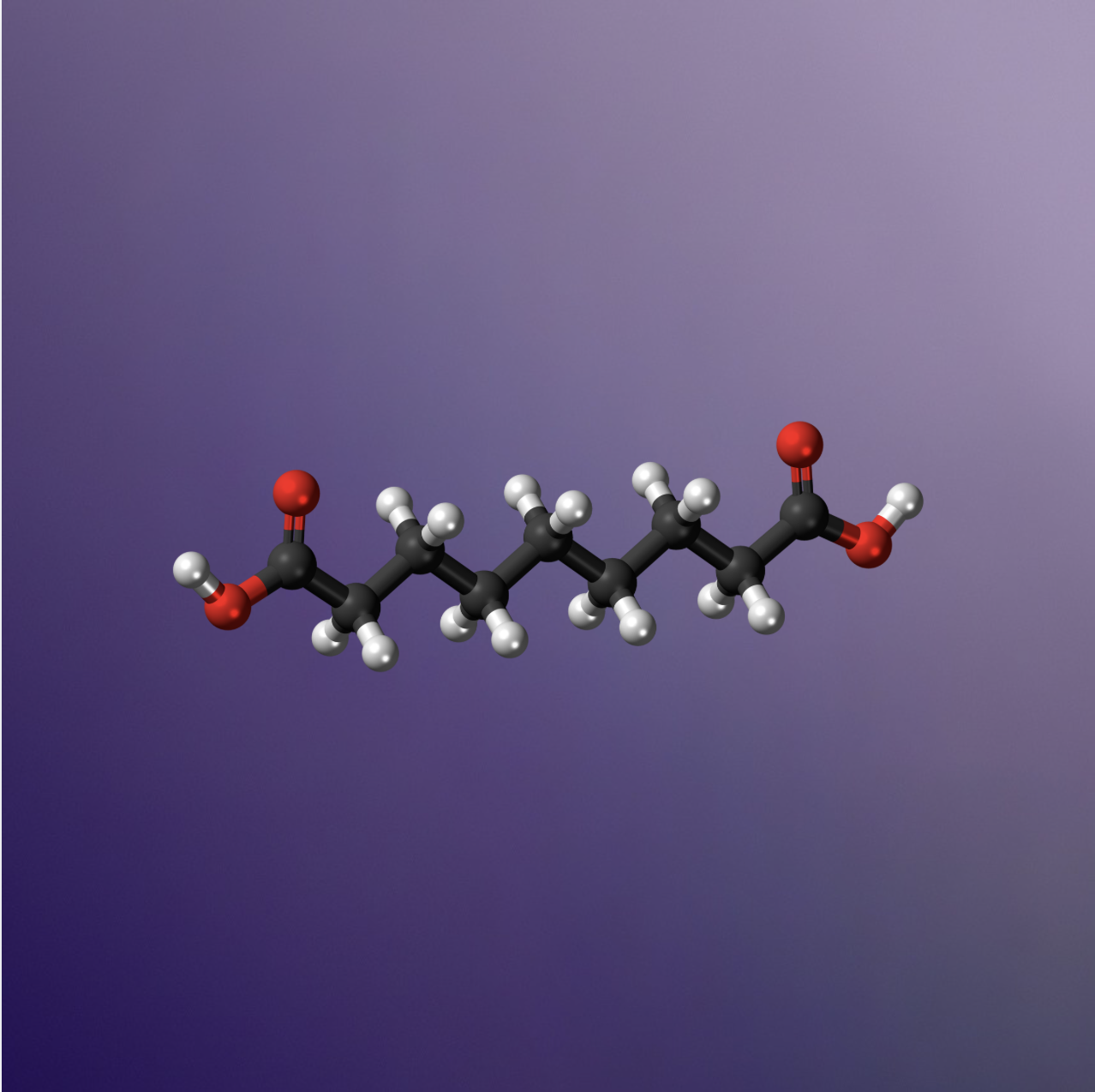
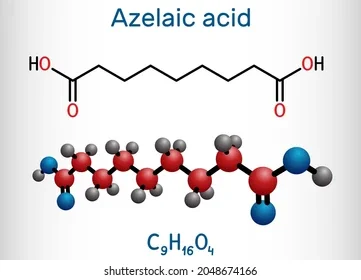
Structurally, AzA is a saturated nine-carbon dicarboxylic acid. This chemical structure gives it the unique ability to act as a competitive inhibitor for multiple oxidative enzymes within the skin, making it a highly versatile tool for treating complex dermatological conditions.
Section 2: The Biology
Part 1: How Azelaic Acid Destroys Skin Microbes
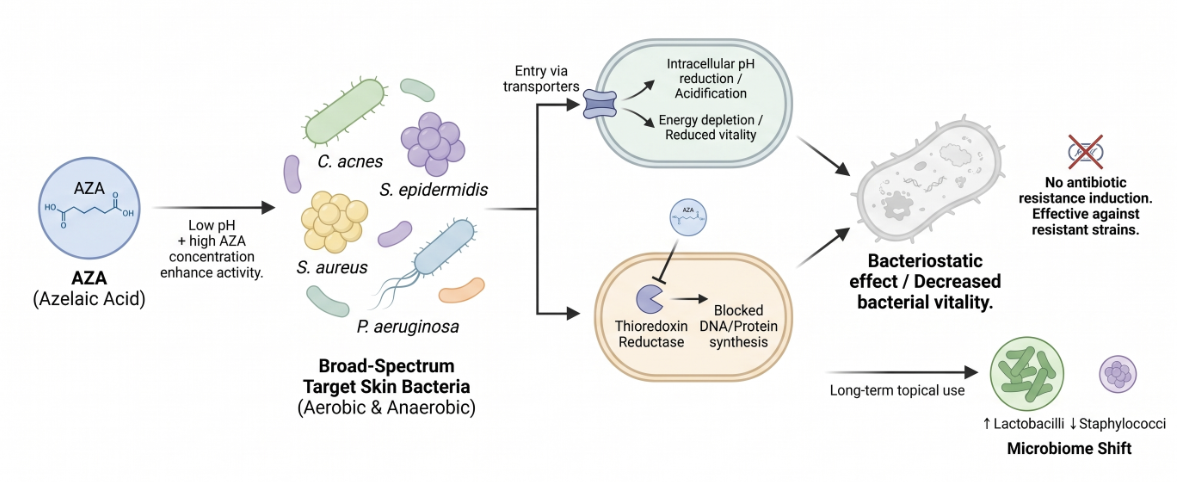
Unlike standard antibiotics, AzA does not induce bacterial resistance. It operates via a multi-system biological attack in acne-causing bacteria like Cutibacterium acnes and Staphylococcus epidermidis.
Part 1a: Diagram Breakdown
The pH Drop: The molecule is transported directly into the bacterial cytoplasm, causing a rapid drop in the bacteria’s intracellular pH.
Energy Failure: This acidic environment paralyzes the bacteria’s metabolism, successfully inhibiting both anaerobic glycolysis and the respiratory chain.
DNA Inhibition: AzA acts as a competitive inhibitor of a vital bacterial enzyme known as thioredoxin reductase. By blocking this enzyme, the bacteria loses its ability to synthesize DNA and RNA, preventing it from replicating and ultimately causing biological failure.
Part 2: The Anti-Inflammatory Cascade
AzA exhibits excellent antioxidant and anti-inflammatory properties that suppress the pathways responsible for reactive, irritated skin.
Inflammation + Antioxidants
Part 2a: Diagram Breakdown (Inflammation & Antioxidants)
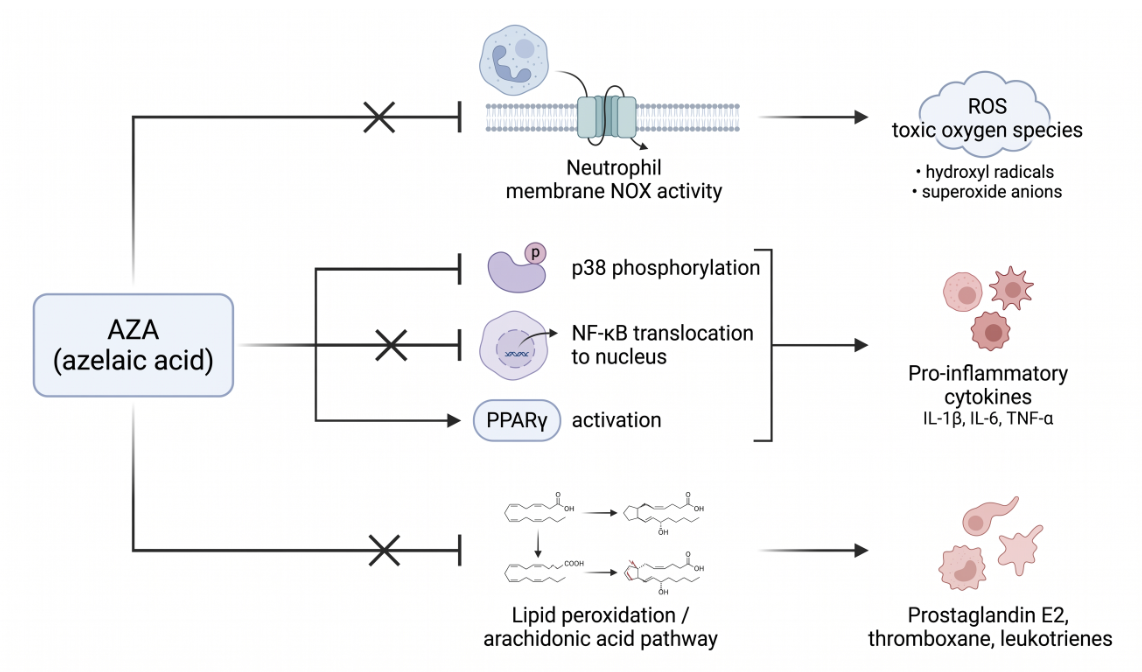
Gene Regulation: AzA Binds to PPAR-y receptors in the skin, which stops the NF-KB signaling pathway from activating. This prevents the release of key inflammatory cytokines (like IL-1β, IL-6, and TNF-α) before they can trigger visible inflammation.
Antioxidant Power: AzA acts as a scavenger of toxic free radicals, specifically neutralizing the highly reactive oxygen species (ROS) generated by neutrophils at the site of inflammation.
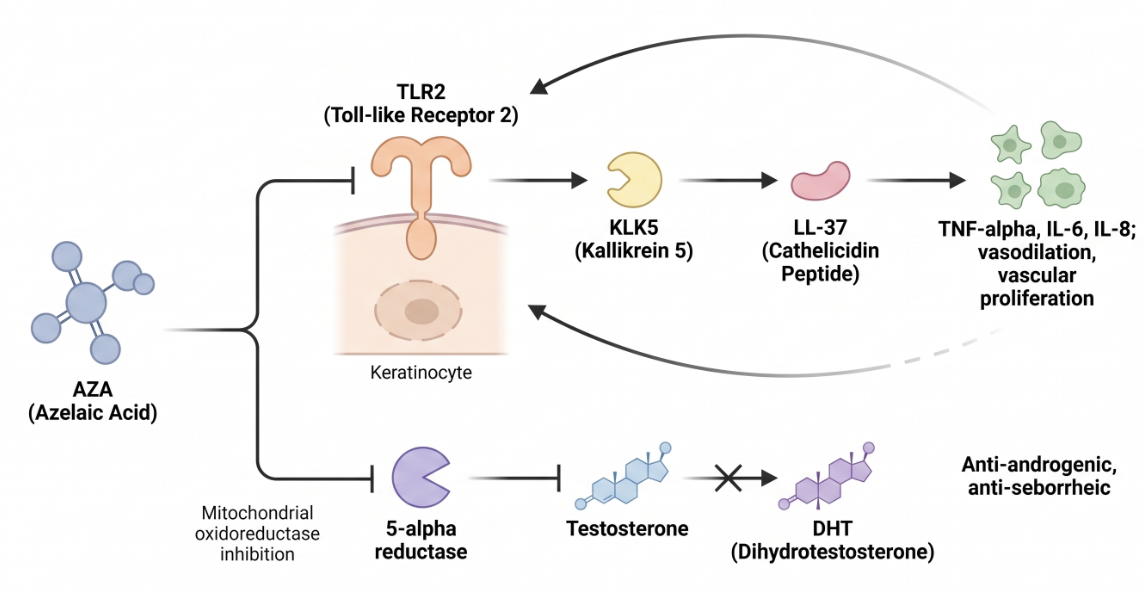
Receptor + Enzyme Modulation
Part 2b: Diagram Breakdown (Receptor & Enzyme Modulation)
Rosacea Relief: AzA directly inhibits kallikrein-5 (KLK5) and the cathelicidin antimicrobial peptide gene (CAMPG). This suppresses the production of LL-37, a specific peptide responsible for the severe redness, inflammation, and abnormal blood vessel growth seen in rosacea.
Sebum Regulation: AzA also acts as a competitive inhibitor of the 5-alpha-reductase enzyme. By blocking this enzyme, it prevents the local conversion of testosterone into dihydrotestosterone (DHT), resulting in anti-androgenic and anti-seborrheic (oil-regulating) effects that improve acne.
Part 3: Targeting Hyperpigmentation
AzA selectively targets hyperactive melanocytes and competitively inhibits tyrosinase to treat abnormal pigmentation disorders.
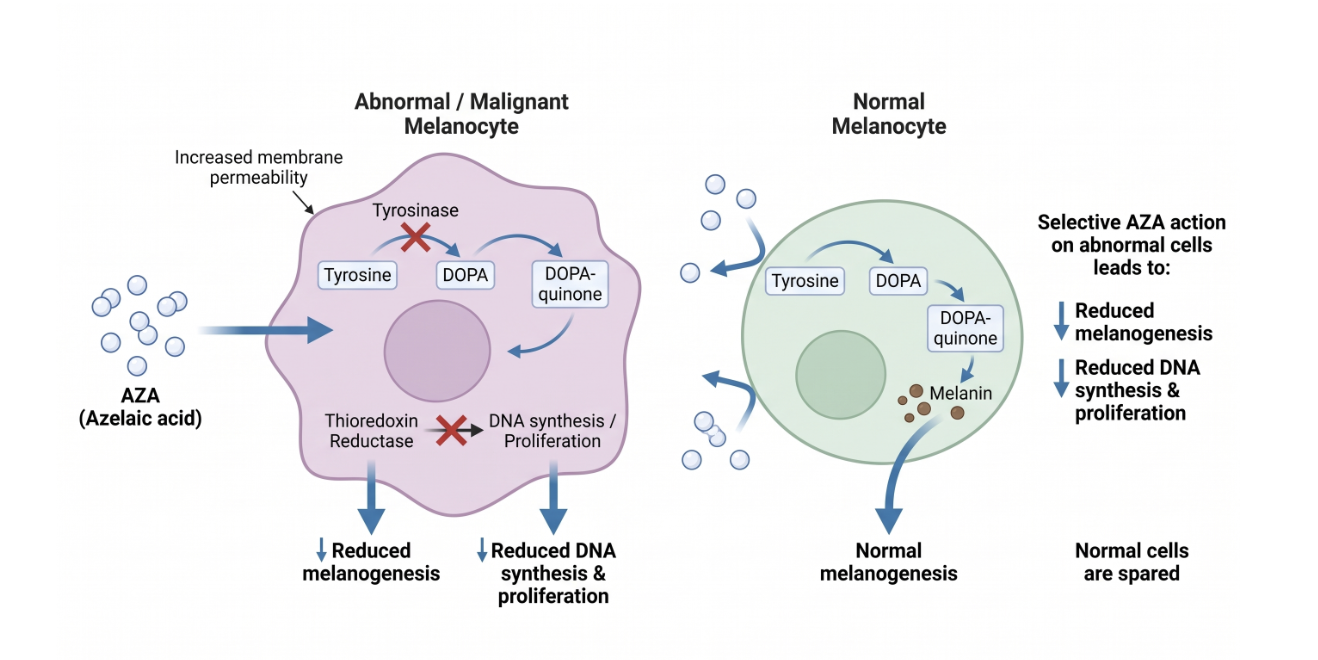
Part 3a: Diagram Breakdown
Abnormal vs. Normal Melanocytes: On the right side, AzA is shown bouncing off normal melanocytes; these normal cells are spared, allowing normal melanogenesis (pigment production) to safely continue. On the left, abnormal melanocytes have increased membrane permeability, allowing the AzA to selectively enter the cell.
Tyrosinase Inhibition: Inside the abnormal melanocyte, AzA competitively inhibits tyrosinase. This stops the conversion of tyrosine into DOPA and DOPA-quinone, which leads directly to reduced melanogenesis.
Thioredoxin Reductase Inhibition: AzA also acts on the abnormal cells to inhibit thioredoxin reductase, leading to reduced DNA synthesis and inhibiting abnormal cellular proliferation.
Part 4: Antikeratinizing (Clearing the Pore)
AzA is an anti-keratinizing agent that modulates early and terminal epidermal differentiation to prevent the structural buildup that leads to clogged pores.
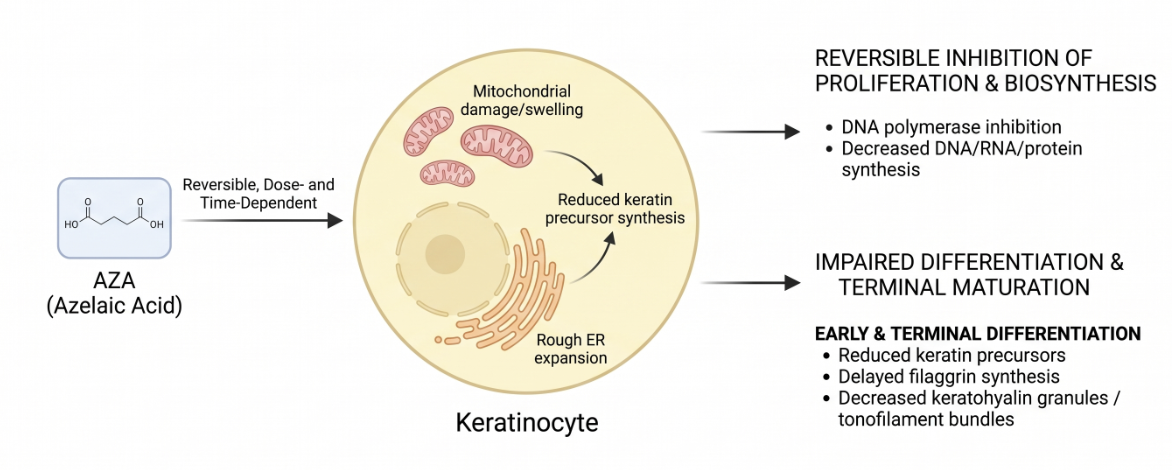
Part 4a: Diagram Breakdown
Cellular Organelle Damage: AzA acts on the keratinocyte in a reversible, dose- and time-dependent manner. Once inside, it causes mitochondrial damage and swelling, alongside the expansion of the rough endoplasmic reticulum.
Inhibition of Proliferation & Biosynthesis: This integral organelle disruption leads to the inhibition of DNA polymerase, which subsequently causes decreased synthesis of DNA, RNA, and proteins.
Impaired Differentiation & Terminal Maturation: Finally, early and terminal differentiation are disrupted. AzA induces reduced keratin precursor synthesis, delayed filaggrin synthesis, and a decrease in both keratohyalin granules and tonofilament bundles.
Section 3: Safety
Topical AzA exhibits an excellent safety profile for individuals aged 12 and older. It is not associated with significant systemic toxicity, allergic sensitization, or photosensitivity. The most common side effects are mild, transient localized reactions such as stinging, itching, burning, and redness at the application site. Notably, it is classified as an FDA Pregnancy Category B medication, making it one of the few powerful clinical tools safe and effective for treating conditions like melasma during pregnancy without adverse systemic effects.
Comment down below any thoughts, contributions, or requests for future posts! :)
Sources:
Feng X, Shang J, Gu Z, Gong J, Chen Y, Liu Y. Azelaic Acid: Mechanisms of Action and Clinical Applications. Clin Cosmet Investig Dermatol. 2024 Oct 22;17:2359-2371. doi: 10.2147/CCID.S485237. PMID: 39464747; PMCID: PMC11512533.
Mariano-Rodriguez C, Nava-Martinez P, Diaz-Molina VL. Azelaic Acid in Dermatology: A Review of Its Mechanism of Action. Cureus. 2025 Oct 13;17(10):e94491. doi: 10.7759/cureus.94491. PMID: 41089572; PMCID: PMC12517662.
Sauer N, Oślizło M, Brzostek M, Wolska J, Lubaszka K, Karłowicz-Bodalska K. The multiple uses of azelaic acid in dermatology: mechanism of action, preparations, and potential therapeutic applications. Postepy Dermatol Alergol. 2023 Dec;40(6):716-724. doi: 10.5114/ada.2023.133955. Epub 2024 Jan 8. PMID: 38282869; PMCID: PMC10809820.